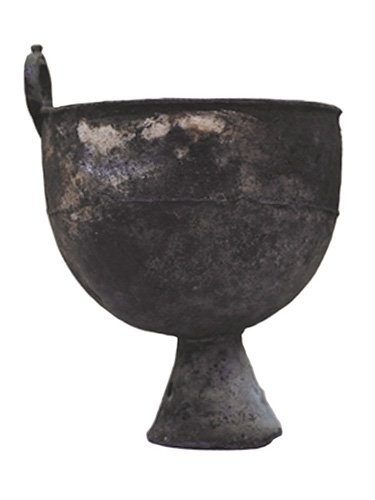
BASEL, SWITZERLAND—According to a statement released by the University of Basel, an international team of scientists has analyzed proteins recovered from residues in two 2,700-year-old bronze cauldrons discovered in northern Mongolia. The test results indicate that the vessels were used to process animal blood, mostly from sheep and goats, and milk, mostly from domestic cattle and yaks. The researchers, led by Shevan Wilkin of the University of Basel, suggest that nomads in Mongolia collected the blood as part of the process of making sausages. Milk was likely fermented in the vessels. “This shows that yaks were domesticated and milked in Mongolia much earlier than previously assumed,” Wilkin said. The fermentation likely preserved the milk as yogurt, or it may have been an ingredient in the sausages, she added. Read the original scholarly article about this research in Scientific Reports. To read about new research on the date of yak domestication, go to "Around the World: Tibet."
Study Shows Bronze Age Cauldrons Held Blood and Milk