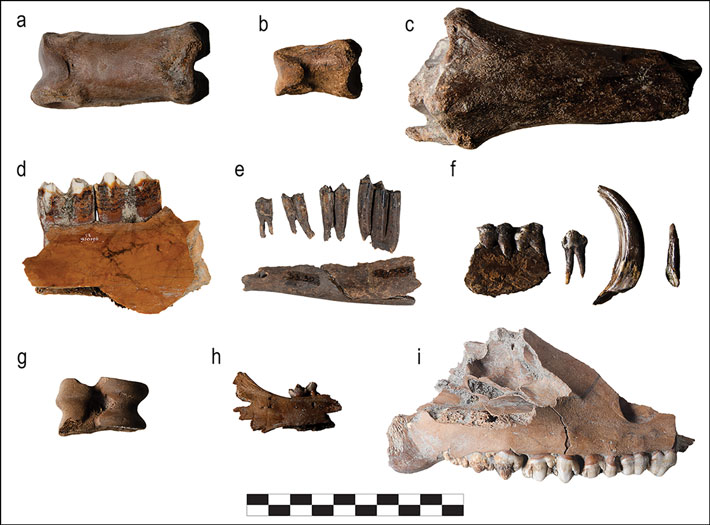
GRONINGEN, THE NETHERLANDS—According to a statement released by Antiquity, new dates and stable isotope analysis for the bones of cattle, sheep, and pigs from the Swifterbant site indicate that animal husbandry in what is now the Netherlands dates back to about 4240 B.C. “What is more, these early farmers had different herds of cattle that were fed and herded in different ways,” said Nathalie Brusgaard of Leiden University. The chemical composition of the cattle bones shows that one group had grazed in forests, while the other group had been kept on manured fields or salt marshes. “These early farmers were incredibly knowledgeable about how to manage livestock in this dynamic environment,” Brusgaard concluded. Read the original scholarly article about this research in Antiquity. To read about pre-Viking human settlement and sheep husbandry in the Faroe Islands, go to "Letter from the Faroes: Lost History of the Sheep Islands."
Bones of Early Cattle Herd in Northern Europe Analyzed