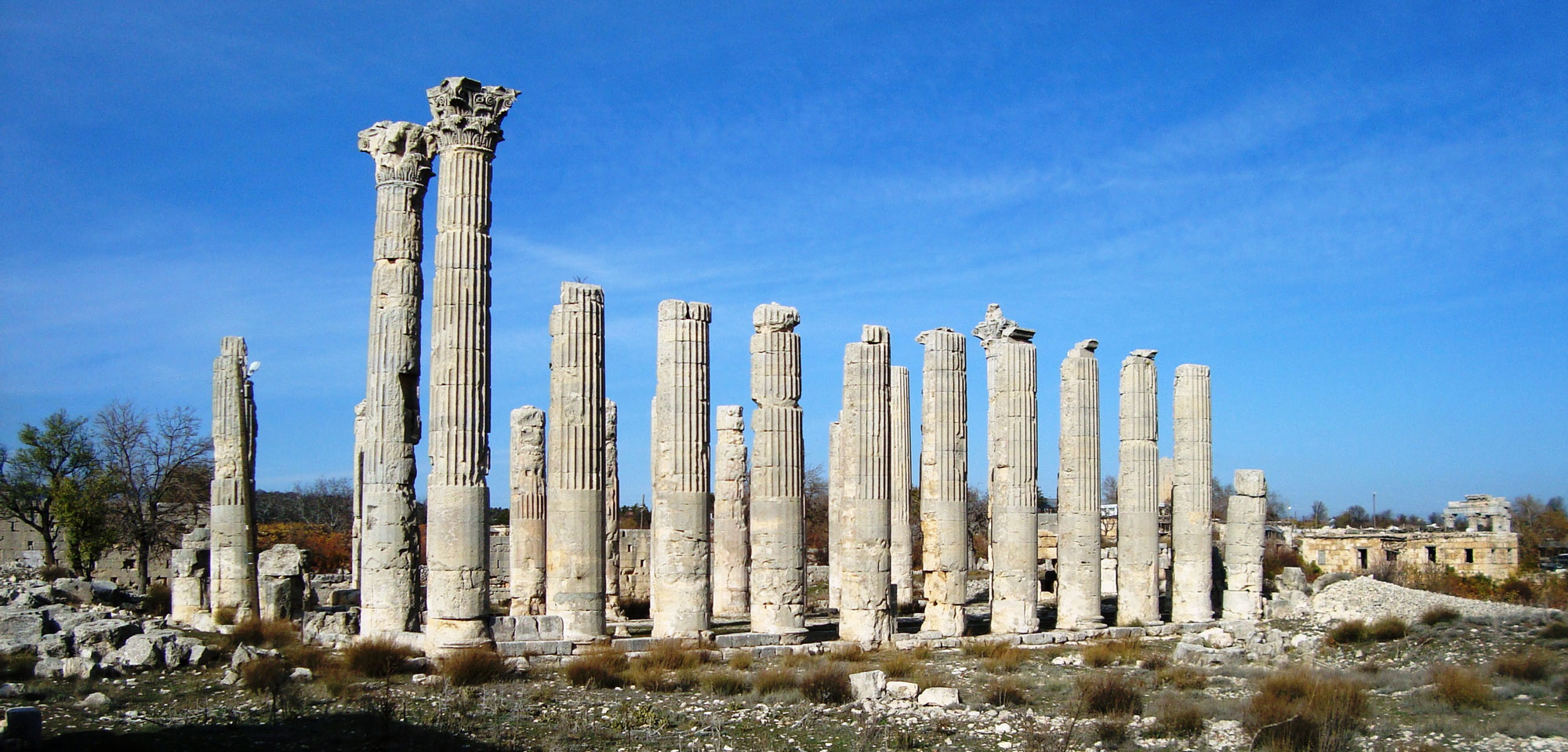

UZUNCABURÇ, TURKEY—During the Hellenistic and Roman periods, the ancient city of Diocaesarea, known today as Uzuncaburç, was a bustling hub in southeastern Turkey. Its well-preserved ruins consist of colonnaded streets filled with shops. According to the Daily Sabah, recent excavations within one of those properties has unearthed a unique set of 1,600-year-old artifacts that is offering new insight into commercial life in the city and its standardized system of weights and measures. Archaeologists from Turkey’s Ministry of Culture and Tourism and Mersin University discovered a complete balance scale and five iron weights that appear to be shaped like the Greek letters, beta, gamma, sigma, psi, and omega. The researchers believe each letter or symbol denoted a specific weight that would have been universally recognized by local or regional merchants. At the time, the unit of measurement was the “litra,” and the five weights range from half a litra to five litras, or about 5.3 ounces to 3.3 pounds. To read about an ancient city in southwestern Anatolia that was founded by at least the fourth century b.c., go to "Off the Grid: Beçin, Turkey."